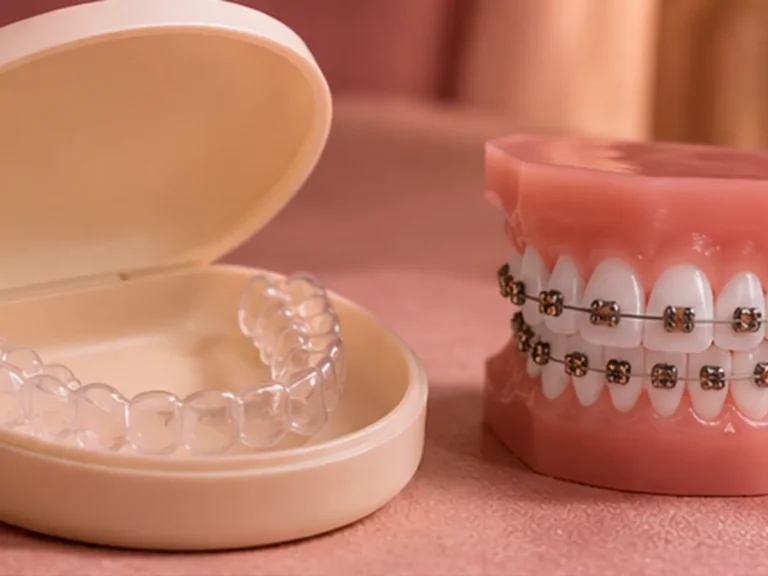
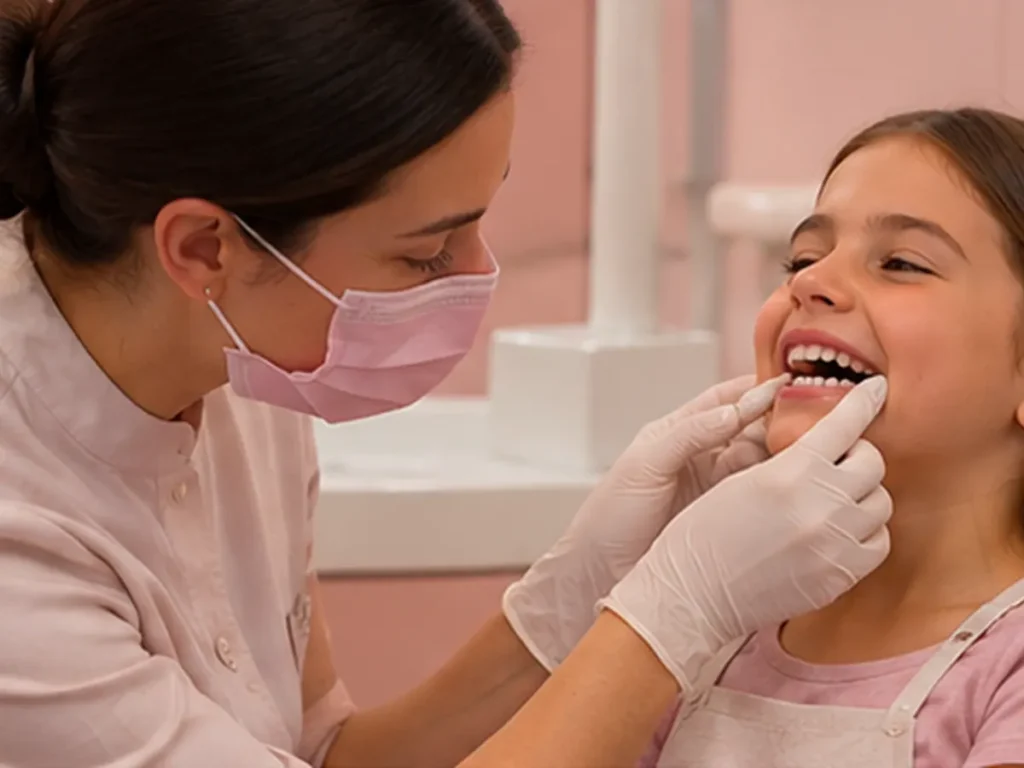
Children’s teeth and jaws develop gradually, and problems with alignment do not always become obvious at the same age. An orthodontic assessment for children can help identify developing bite irregularities before all permanent teeth have emerged. At Serenity Dental Clinic in Dubai, orthodontic treatment includes assessment of dental alignment, jaw growth and functional concerns. An early examination does not necessarily mean that a child needs braces. Instead, it helps determine whether monitoring, timely intervention or treatment at a later stage may be appropriate.
At What Age Should Children Have Their First Orthodontic Assessment?
Orthodontic organisations commonly recommend an initial evaluation by around seven years of age, although some children may need assessment earlier if specific concerns arise. By this stage, the first permanent molars and some permanent incisors have usually appeared, allowing the orthodontist to examine how the developing teeth and jaws relate to one another.
A professional orthodontic assessment may identify bite problems that are not obvious to parents. The examination considers the position of erupting teeth, available space and relationships between the dental arches. Importantly, early evaluation is different from early treatment, and many children require only periodic observation while their teeth develop.
What Signs May Indicate That a Child Needs Orthodontic Evaluation?
Parents often associate orthodontics with visibly crooked teeth, but alignment is only one aspect of dental development. A malocclusion can involve the relationship between the upper and lower teeth, sometimes affecting chewing, tooth wear or the way the dental arches fit together.
Certain changes may deserve particular attention during childhood, including:
- Dental crowding: Teeth overlapping or emerging out of position because of limited space.
- Crossbite: One or more upper teeth closing inside the lower teeth.
- Overjet: Upper front teeth projecting noticeably forwards relative to the lower teeth.
- Open bite: A gap remaining between certain upper and lower teeth when the jaws close.
These findings do not automatically require orthodontic treatment. Their importance depends on the child’s age, skeletal development, oral health and functional needs. A clinical examination helps distinguish normal developmental variations from conditions requiring further evaluation.
Why Can Jaw Growth Influence the Timing of Orthodontic Treatment?
The upper and lower jaws do not always grow at the same rate. During childhood, changes in jaw dimensions can influence tooth eruption, available space and bite relationships. These developmental processes are one reason why orthodontists may recommend evaluating certain problems before permanent dentition is complete.
For selected patients, interceptive orthodontics may address specific developing problems while growth is ongoing. This could involve monitoring tooth eruption, managing particular bite irregularities or assessing whether an appliance is appropriate. However, not every orthodontic concern benefits from treatment during childhood.
Clinical decisions must consider whether intervention at a particular age offers a meaningful advantage over waiting. The goal is to choose appropriate treatment timing, rather than assuming that beginning orthodontics earlier always produces better outcomes.
Can a Narrow Upper Jaw Be Identified During Childhood?
A narrow upper dental arch may be associated with certain bite relationships, including posterior crossbite. During an orthodontic examination, the clinician evaluates dental arch width, tooth position and skeletal development to understand whether the observed problem involves the teeth, the jaws or both.
In suitable growing patients, a palatal expander may be considered to address specific upper arch width problems. Different expansion appliances work through different mechanisms, and their suitability depends on skeletal maturity and clinical findings.
Expansion is not appropriate for every child with crowded teeth. A narrow dental arch also does not automatically establish the presence of a breathing disorder. Orthodontic and airway-related findings require individual evaluation, particularly when a child has additional symptoms involving nasal breathing or sleep.
Does Every Child With Crooked Teeth Need Braces?
Crowded or rotated teeth are common concerns during dental development, but their management depends on the underlying condition. Some irregularities change as permanent teeth emerge, while others persist or become more noticeable. An orthodontist can assess whether the available space and bite relationships are likely to require intervention.
When active treatment is indicated, the options may include fixed braces, selected removable appliances or other orthodontic techniques. The appliance is chosen according to the type of tooth movement required, the child’s development and practical considerations such as oral hygiene.
Clear aligners may also be appropriate for selected younger patients, provided the treatment can be managed consistently. Removable appliances depend on cooperation and appropriate wearing time, while fixed appliances require careful cleaning and scheduled adjustments. No single option is suitable for every developing bite problem.
How Are Children’s Orthodontic Problems Assessed?
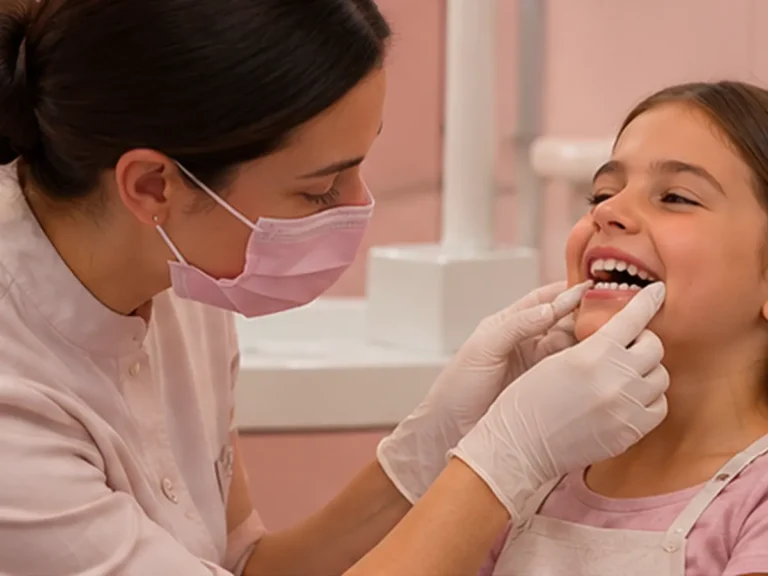
An orthodontic examination typically begins with a review of the child’s dental history, oral health and concerns reported by parents. The clinician observes tooth eruption, dental alignment and how the upper and lower teeth meet. Jaw development and functional considerations may also be evaluated when relevant.
Digital technology can support this process. An intraoral scanner may produce three-dimensional records of the teeth, while photographs and radiographic examinations can provide additional information when clinically indicated. These records assist planning but do not replace professional interpretation.
At Serenity Dental Clinic, Dr Omar Farsakh provides orthodontic care supported by digital planning and a multidisciplinary dental team. The approach considers alignment and bite function alongside individual developmental needs. Treatment recommendations depend on clinical findings, rather than a standard timetable applied to every child.
Orthodontic Assessment for Children: Why Early Evaluation Does Not Always Mean Early Treatment
An orthodontic assessment for children provides an opportunity to examine how teeth and jaws are developing and identify concerns that may require attention. Problems such as crowding, crossbite and unusual bite relationships can be evaluated before all permanent teeth have emerged, but treatment is not automatically necessary.
For many children, monitoring development is the most appropriate initial approach. Others may benefit from specific interventions during growth, followed by further evaluation as their permanent teeth develop. The timing and type of orthodontic care should reflect individual needs, clinical evidence and the expected benefits of treatment.
At Serenity Dental Clinic, orthodontic assessments combine clinical examination, digital records when indicated and personalised treatment planning. Understanding the stages of dental development helps parents make informed decisions without assuming that every irregularity requires immediate correction.
Visit us at Serenity Dental Clinic
2202, 22nd floor, Control Tower, Motor City, Dubai