Snoring is extremely common, and an occasional noisy night does not necessarily indicate a medical problem. However, when snoring becomes persistent, very loud or associated with interruptions in breathing, it may be a sign that something more significant is happening during sleep. Understanding the relationship between Snoring and Sleep Apnea can help patients recognise when a familiar nighttime habit deserves further investigation.
The main difference is that ordinary snoring involves noise caused by vibration within a narrowed airway, while sleep apnea involves repeated pauses or reductions in breathing. Because these events occur during sleep, the person experiencing them may remain completely unaware of the problem.
At Serenity Dental Clinic in Dubai, breathing, jaw function and sleep quality are considered together as part of an attentive and patient-centred approach. Identifying the cause of snoring is important because the right management depends on whether the issue is simple snoring, nasal obstruction, jaw position or a form of sleep-disordered breathing.
What Causes Snoring?
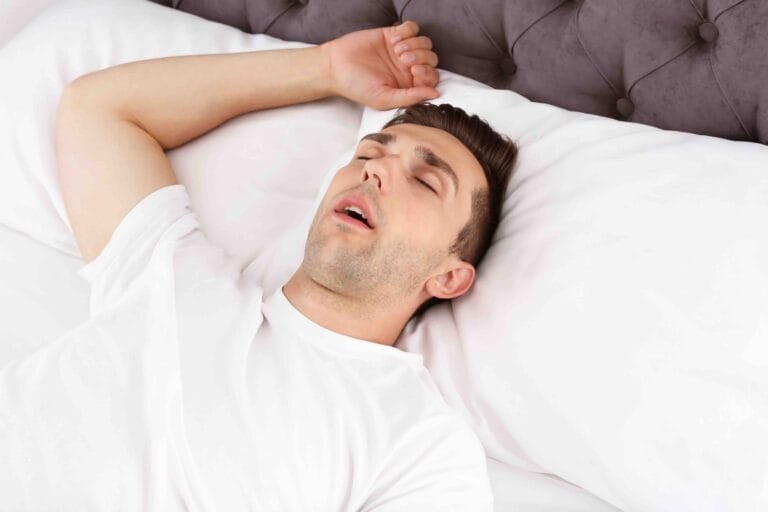
Snoring occurs when air cannot move freely through the nose and throat during sleep. As the surrounding tissues relax and the airway becomes narrower, structures such as the soft palate, tongue and throat tissues may vibrate, producing the familiar sound.
The intensity of snoring can vary considerably. Some people snore only occasionally, particularly when they have a cold, sleep on their back or have consumed alcohol before bedtime. Others snore almost every night, and the noise may be loud enough to disturb a partner or other family members.
Factors that may contribute to snoring include:
- nasal congestion or restricted nasal breathing;
- the position of the tongue and lower jaw;
- sleeping on the back;
- excess weight around the neck;
- alcohol consumption, particularly before sleep;
- smoking;
- reduced muscle tone with age;
- anatomical narrowing of the upper airway.
Snoring itself does not always mean that breathing has stopped. In simple snoring, airflow continues, although it may move through a restricted space. Nevertheless, persistent snoring should not automatically be dismissed, particularly if it has become louder, is accompanied by choking sounds or affects daytime wellbeing.
It is also important to avoid assuming that the loudness of the sound alone reveals how serious the problem is. A very loud snorer may not necessarily have severe sleep apnea, while another person may experience clinically relevant breathing interruptions without producing dramatic noise.
What Is Sleep Apnea and How Is It Different from Snoring?
Sleep apnea is a sleep-related breathing condition in which breathing repeatedly stops and restarts during the night. The most common form is obstructive sleep apnea, which occurs when the upper airway becomes partially or completely blocked while the person is asleep.
When the airway closes, oxygen intake may decrease and the brain briefly activates the body to restore breathing. The person may gasp, snort, change position or briefly wake up without remembering the episode the following morning. This pattern can repeat many times throughout the night and prevent the body from maintaining deep, restorative sleep.
The essential difference between ordinary snoring and sleep apnea is therefore not simply the volume of the noise. With snoring, airflow remains present. With apnea, breathing becomes significantly reduced or temporarily stops.
A typical sequence noticed by a partner may include:
- loud or irregular snoring;
- a period of silence;
- a visible pause in breathing;
- gasping, choking or snorting;
- the return of loud breathing.
Not everyone who snores has sleep apnea, and not every person with sleep apnea presents in exactly the same way. For this reason, symptoms need to be assessed as a whole rather than relying on one sign alone.
What Signs Suggest That Snoring Could Be Sleep Apnea?
The person who is snoring may not be the first to recognise a problem. Often, a partner notices breathing pauses, choking noises or repeated changes in breathing rhythm during the night.
Nighttime warning signs may include:
- frequent and persistent loud snoring;
- breathing that repeatedly stops and starts;
- gasping, choking or snorting sounds;
- restless sleep and frequent awakenings;
- waking with a dry mouth;
- needing to urinate several times during the night;
- sweating or sleeping in unusual positions;
- waking suddenly with a feeling of breathlessness.
The effects can also continue during the day. A person may sleep for seven or eight hours but still wake feeling exhausted because repeated breathing disturbances have fragmented the sleep cycle.
Possible daytime symptoms include morning headaches, poor concentration, forgetfulness, irritability, mood changes and excessive sleepiness. Some patients notice reduced work performance, low energy or difficulty remaining alert while driving.
Snoring accompanied by these symptoms is different from an occasional harmless noise. Particular attention is advisable when another person has witnessed breathing pauses or when daytime sleepiness is affecting routine activities.
Can You Have Sleep Apnea Without Loud Snoring?
Although loud snoring is one of the best-known signs, it is possible to have sleep apnea without obvious or dramatic snoring. Symptoms can vary according to age, sex, anatomy, sleep position and the type of breathing disturbance involved.
Some people may make only light snoring sounds, breathe heavily or experience episodes that are difficult for a partner to recognise. Others sleep alone and therefore have no one available to observe their nighttime breathing.
In some women, sleep apnea may present less typically, with symptoms such as insomnia, fatigue, headaches, poor mood or unrefreshing sleep rather than the classic combination of loud snoring and marked daytime sleepiness. This can make the condition easier to overlook.
For this reason, a person should not assume that the absence of loud snoring completely rules out a sleep-related breathing problem. Warning signs such as waking unrefreshed, unexplained daytime fatigue, morning headaches, dry mouth, concentration problems or repeated nighttime awakenings may still justify further assessment.
Similarly, smartphone recordings and sleep applications may capture useful information, but they cannot establish a diagnosis. They may miss quiet breathing events, interpret ordinary movement incorrectly or fail to measure important physiological changes. A professional evaluation remains necessary when symptoms suggest that sleep quality or nighttime breathing may be compromised.
Why Should Sleep Apnea Not Be Ignored?
Repeated breathing interruptions can prevent the body from receiving consistent oxygen and disrupt the normal structure of sleep. Even when the person does not remember waking, the brain may repeatedly move from deeper sleep into a lighter stage so that breathing can restart.
This explains why someone with sleep apnea may spend many hours in bed yet feel as though they have barely rested. Over time, persistent sleep disruption may affect attention, memory, mood and daily energy. Excessive sleepiness can also become particularly concerning when driving or operating machinery.
Sleep apnea may be associated with broader health concerns, which is why persistent symptoms should not be treated simply as an inconvenience for a sleeping partner. The purpose of evaluation is not to create unnecessary alarm but to understand whether nighttime breathing is stable and whether further investigation is appropriate.
Patients should also avoid trying to silence snoring without investigating its cause. A product that reduces noise does not necessarily resolve an obstruction or prevent breathing pauses. The absence of sound after using a home remedy should therefore not be interpreted as proof that the airway is functioning normally.
The safest approach is to distinguish between a sound-related problem and a genuine breathing disorder before selecting any treatment.
How Are Snoring and Sleep Apnea Evaluated?
The assessment usually begins with a detailed discussion of the patient’s sleep symptoms, general health and breathing habits. Information provided by a partner can be especially valuable because the patient may not be aware of pauses, choking sounds or restless movements.
A dental and airway evaluation may consider:
- nasal and mouth breathing patterns;
- tongue posture and available space within the mouth;
- the position of the lower jaw;
- dental alignment and bite relationships;
- tooth grinding or clenching;
- dry mouth and oral tissue health;
- temporomandibular joint function;
- relevant digital scans or imaging when clinically indicated.
These findings cannot independently confirm sleep apnea, but they may reveal factors that could influence the airway or indicate that further medical sleep assessment is appropriate.
Diagnosis may require a formal sleep study arranged through an appropriate healthcare professional. This can record breathing, oxygen levels and other sleep-related information to determine whether apnea is present and assess its severity.
At Serenity Dental Clinic, airway dentistry is based on collaboration when needed. The aim is to understand the complete clinical picture rather than treating snoring as an isolated symptom.
Can Snoring and Sleep Apnea Be Treated in the Same Way?
The correct treatment depends on the cause and severity of the problem, so simple snoring and diagnosed sleep apnea should not automatically be managed in the same way.
For some patients, lifestyle measures may support better nighttime breathing. These can include addressing excess weight where relevant, limiting alcohol before bedtime, stopping smoking and changing sleep position. Nasal obstruction may require separate assessment because comfortable nasal breathing is an important part of healthy sleep.
In selected cases, a custom-made oral appliance may be considered to support the position of the lower jaw and help maintain airway space. However, such a device should be recommended only after appropriate assessment. It must be designed for the individual patient and monitored over time to evaluate comfort, bite stability and jaw-joint health.
Other patients may require different medical therapies depending on the diagnosis. There is no single option that is suitable for everyone.
Patients should avoid generic mouthguards, self-adjusted devices, mouth taping or online products used without professional guidance. These approaches may fail to address the actual obstruction and could delay a necessary diagnosis. Treating nighttime breathing safely begins with identifying why the snoring occurs.
Snoring and Sleep Apnea: Understanding When to Seek Advice
The distinction between Snoring and Sleep Apnea lies in what happens to breathing during sleep. Ordinary snoring is caused by vibrating tissues while air continues to pass through the airway. Sleep apnea involves repeated reductions or pauses in breathing, often followed by gasping, brief awakenings and disrupted rest.
Persistent loud snoring, witnessed breathing pauses, choking sounds, morning headaches and excessive daytime tiredness should not be ignored. These symptoms do not confirm sleep apnea on their own, but they indicate that a professional assessment may be appropriate.
At Serenity Dental Clinic in Dubai, airway health is evaluated by considering breathing patterns, jaw position, oral function and sleep-related symptoms together. This comprehensive approach helps clarify whether snoring is an isolated issue or part of a wider breathing disorder, allowing the patient to receive guidance suited to their individual needs.
Visit us at Serenity Dental Clinic
2202, 22nd floor, Control Tower, Motor City, Dubai